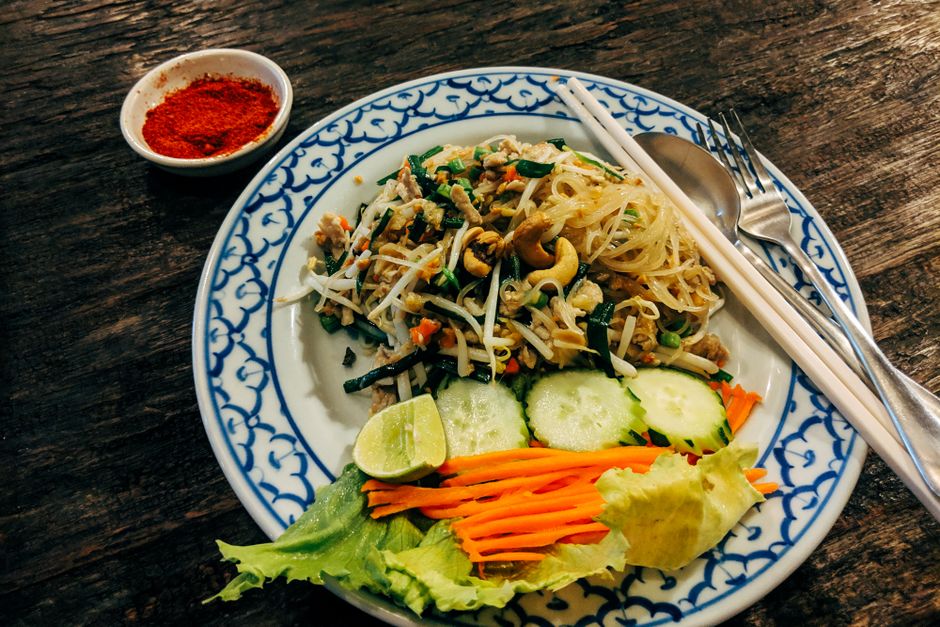
Thai noodle dishes are some of the most beloved meals in the world, and once you understand what makes each one special, you'll appreciate them way more. Whether you're ordering takeout or sitting down at a restaurant, knowing the difference between Pad Thai and Pad See Ew or recognizing why Boat Noodles earn their reputation as "The King of Noodle Soups" will totally change how you experience Thai food.
Let's break down the best Thai noodle dishes so you know exactly what you're getting and why they taste so incredible.
The Four Flavor Pillars of Thai Noodles
Before we dive into specific dishes, here's the secret: every great Thai noodle dish balances four essential tastes.
Sweet, sour, salty, and spicy work together in harmony. That's the foundation of Thai cooking, and it's what makes these dishes so addictive. When one flavor is missing or out of balance, the whole dish feels flat.
This principle shows up in almost every noodle preparation you'll encounter, from stir-fried to soup-based dishes. Understanding this balance helps you understand why Thai food tastes the way it does and what to look for when you're ordering.
Pad Thai: The Most Famous Thai Noodle Dish
Pad Thai is probably the first Thai noodle dish most people try. It's Thailand's national noodle dish, and for good reason.
This stir-fried noodle dish uses Sen Chan noodles, which are thin, delicate rice noodles originally from Chantaburi province in Thailand. The noodles get tossed with a mixture of tamarind paste (sour), fish sauce (salty), palm sugar (sweet), and dried chilies or chili paste (spicy). That's your four flavors right there, all working together.
You'll typically find Pad Thai served with your choice of protein—chicken, shrimp, pork, or tofu—along with eggs, bean sprouts, and crushed peanuts on top. The crushed peanuts add both texture and richness.
What makes Pad Thai special is its simplicity. It's not complicated, but getting the balance right takes skill. Yoksod Noodles and Thai treats Pad Thai with the respect it deserves, making sure every component works in harmony rather than just throwing ingredients together.
Pad See Ew: The Dark and Savory Option
Pad See Ew translates to "stir-fried soy sauce," and that dark soy sauce is what gives this dish its color and deep, savory flavor.
This dish uses wider, slightly thicker rice noodles than Pad Thai. The noodles get stir-fried with dark soy sauce, which is naturally sweet and gives the dish a rich, almost caramel-like quality. You'll find tender meat—usually chicken, beef, or pork—mixed in with Chinese broccoli or regular broccoli.
The flavor profile is less acidic than Pad Thai because there's no tamarind involved. Instead, you're getting deep umami from the dark soy sauce and the meat. It's comfort food, honestly. The noodles should be slightly chewy, not mushy.
Pad Woon Sen: Glass Noodles for Texture
Pad Woon Sen uses glass noodles, which are thin, translucent noodles made from mung bean starch. They have a completely different texture than rice noodles—more delicate and bouncy.
Glass noodles don't have much flavor of their own, so they act like a blank canvas for whatever sauce you're using. In Pad Woon Sen, you get a light stir-fry with garlic, a mix of proteins (usually shrimp, pork, and chicken), vegetables, and a savory-spicy sauce.
Because glass noodles are so delicate, they cook quickly and absorb flavors easily. The result is a lighter dish compared to Pad Thai or Pad See Ew, but it's still deeply satisfying.
Boat Noodles: The King of Noodle Soups
Boat Noodles earned their nickname for a reason. This is one of Thailand's most celebrated noodle soups, and it's packed with flavor and complexity.
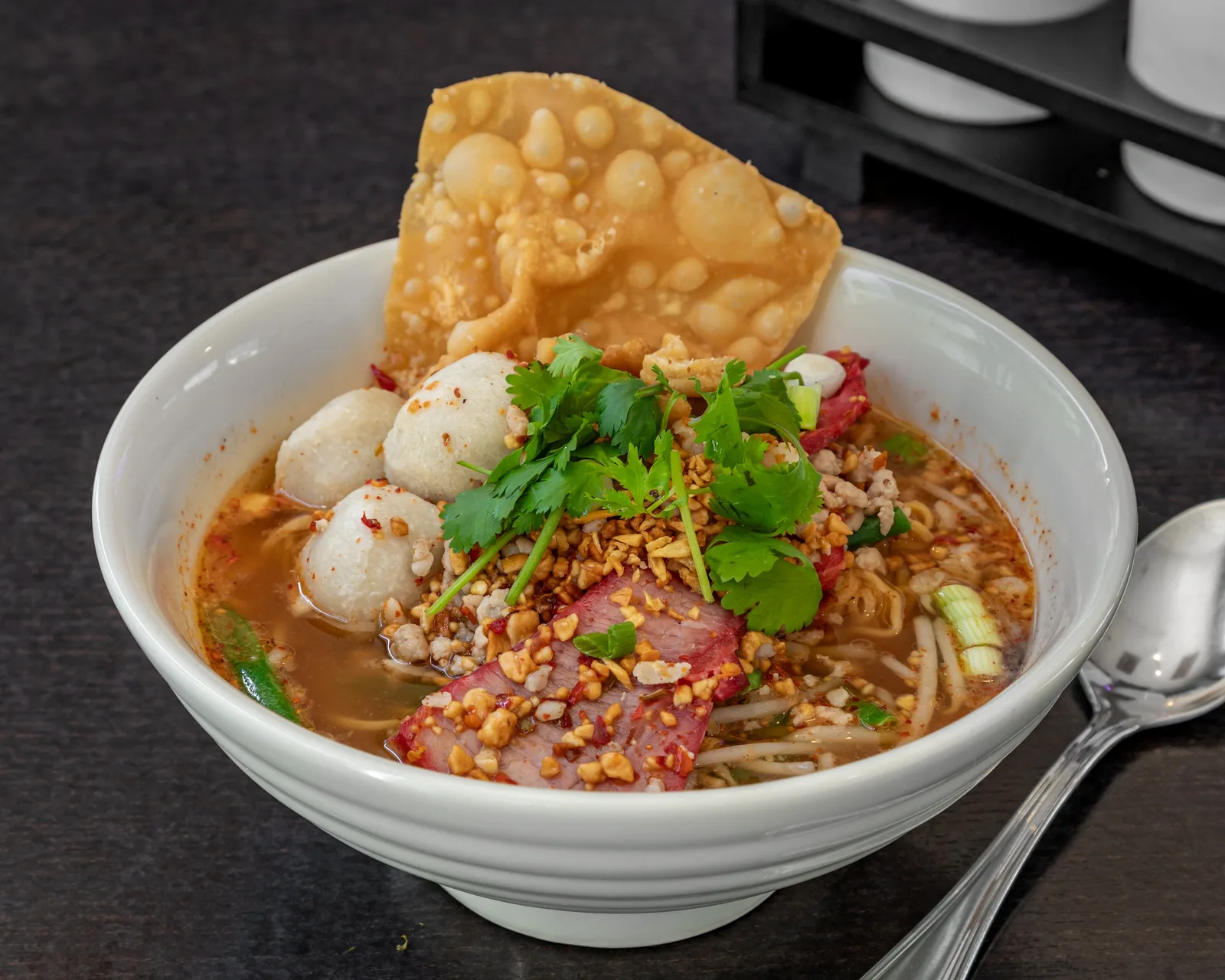
Boat Noodles are traditionally served in a small bowl with a rich, dark broth made from pork or beef. The broth gets its color and depth from slow-simmered meat, blood, and spices. Inside you'll find thin rice noodles, tender meat, pork balls (which add a bouncy texture), and fresh herbs like cilantro and Thai basil.
The spice level can be intense, so don't be shy about asking how hot it is. The flavors are bold and concentrated—this isn't a delicate soup. It's meant to wake up your taste buds and satisfy you completely.
Tom Yum Noodles: Spicy and Aromatic
Tom Yum is one of Thailand's most iconic flavor profiles, and when you put it with noodles, you get something special.
Tom Yum Noodles come in two main styles: as a soup and as a dry stir-fry. Both versions use the same foundational flavors—lemongrass, galangal, lime juice, and chilies create that signature spicy-sour-aromatic profile that Tom Yum is famous for.
Guay Tiew Tom Yum (rice noodles in Tom Yum broth) often features minced pork and pork balls in a spicy, fragrant soup. The aromatic herbs and bright lime juice make it incredibly refreshing, even though it's hot. If you love bold, complex flavors, this is your dish.
Khanom Jin Nam Ya: Noodles with Curry Sauce
Khanom Jin Nam Ya is different from the stir-fried and soup-based dishes we've covered so far. This one uses rice vermicelli—super thin, delicate rice noodles—served with a creamy fish curry sauce.
The sauce is what makes this special. Nam Ya is made from fish curry paste, coconut milk, and sometimes ground meat, creating a rich, slightly spicy sauce. The vermicelli gets topped with fresh vegetables, hard-boiled eggs, and sometimes ground pork or shrimp.
This is comfort food with a Thai twist. The creaminess of the sauce combined with the delicate noodles creates a totally different eating experience than Pad Thai or Boat Noodles. It's milder in heat but packed with flavor.
Pad Kee Mao: The Drunken Noodles
Pad Kee Mao, also called "Drunken Noodles," is an underrated dish that deserves more attention.
This stir-fried noodle dish gets its name from its bold, spicy heat and intense garlic flavor—supposedly perfect for eating when you've had a few drinks. It uses wide rice noodles, fresh basil, dried chilies, and lots of garlic. The sauce is savory and slightly sweet, but the heat from the fresh and dried chilies is real.
Pad Kee Mao is usually served with your choice of protein, and it comes topped with fresh Thai basil leaves. If you want something that brings the heat and flavor without being overly complicated, this is it.
Understanding Thai Noodle Types

The type of noodle used in a dish affects the entire eating experience. Thai cuisine uses multiple noodle varieties for a reason.
Rice noodles are the most common. They come in different widths: thin ones for Pad Thai, wider ones for Pad See Ew, and vermicelli for lighter soups and curries.
Glass noodles (also called cellophane noodles) have that bouncy, delicate texture and work best in lighter stir-fries. They cook quickly and absorb flavors easily.
Egg noodles are sometimes used in drier stir-fry dishes, giving them a richer texture. Each type has its place, and choosing the right noodle for the right preparation is part of what makes Thai noodle dishes so well thought out.
How to Order and Appreciate Thai Noodles
When you're ordering Thai noodles, knowing what you want makes a huge difference. Here's what to keep in mind.
First, think about whether you want something soup-based or stir-fried. Soups are great if you want something warming and deeply flavored. Stir-fried dishes are more about the noodle texture and how the sauce coats everything.
Second, know your spice tolerance. Thai restaurants can dial the heat up or down, but some dishes (like Pad Kee Mao or Boat Noodles) are naturally pretty spicy. It's totally fine to ask for mild if you're not sure.
Related: Best Thai Noodle Restaurant Delivery in Seattle, WA
Third, pay attention to the protein options. Some dishes shine with certain proteins—Pad Thai is great with shrimp, but Pad See Ew really shows off beef or chicken.
When you're ready to experience these dishes firsthand, Yoksod Noodles and Thai makes ordering online easy, or you can stop by the restaurant to see how each dish is prepared. The craftsmanship that goes into authentic Thai noodle cooking is something you can actually taste.
Hungry?
Order Now →The Harmony Behind Every Bowl
What ties all these dishes together is the philosophy behind Thai cooking. According to research on traditional Thai cuisine and nutrition, Thai cooking emphasizes balance in flavors and ingredients as a fundamental principle, not just a preference.
Every dish we've covered—from Pad Thai to Boat Noodles—is designed around creating harmony. The cook's job isn't to make one flavor dominate. It's to make everything work together so that sweet, sour, salty, and spicy all shine equally.
That's why the best Thai noodle dishes taste so satisfying and complete. When balance is right, you don't need fancy techniques or complicated ingredients. You just need fresh components, proper ratios, and respect for the tradition.
Next time you're ordering Thai noodles, remember that balance. Notice how the flavors work together. That's the real magic of Thai cuisine, and once you understand it, you'll start appreciating every bowl way more.
Where to Experience Authentic Thai Noodles
If you're in Seattle and want to try these dishes prepared with authentic technique and fresh ingredients, finding a restaurant that takes Thai noodle cooking seriously matters.
Authentic preparation means respecting the balance we've talked about throughout this guide. It means using quality ingredients like fresh basil, real fish sauce, and proper noodle types. It means understanding that Pad Thai isn't something you rush through—it's something you make with intention.
Related: Thai Peanut Noodle Sauce Recipe: Easy Homemade Guide
Whether you prefer dining in to watch the cooks work or ordering online for convenient access to real Thai flavors, you deserve the genuine article. That's what makes the difference between forgettable takeout and a meal that actually sticks with you.
What's the difference between Pad Thai and Pad See Ew?
Pad Thai uses tamarind paste for sourness and thinner rice noodles, while Pad See Ew uses dark soy sauce for depth and wider, chewier noodles. Pad Thai is brighter and more balanced across all four flavors. Pad See Ew is richer and more savory. They're different dishes with different flavor profiles, so your choice really depends on whether you want something tangy or deep.
Are Thai noodle dishes spicy?
Most Thai noodle dishes can be made spicy or mild depending on your preference. Boat Noodles and Pad Kee Mao tend to be naturally spicier, while Khanom Jin Nam Ya and Pad See Ew are usually milder. Always ask the restaurant about heat level when ordering—good Thai restaurants will adjust to your tolerance without sacrificing flavor.
What noodles are used in Pad Thai?
Pad Thai uses Sen Chan rice noodles, which are thin, delicate rice noodles traditionally from Chantaburi province in Thailand. These noodles have the right texture to absorb the sweet-sour-salty-spicy sauce without falling apart or becoming mushy.
Can I get Thai noodle dishes if I'm vegetarian?
Absolutely. Most Thai noodle dishes can be made vegetarian by substituting tofu or omitting the meat entirely. The sauce and flavor profile stay the same. Just let the restaurant know your dietary preferences when ordering, and they can prepare it properly. Pad Thai and Pad Woon Sen work especially well as vegetarian options.
Hungry?
Order Now →